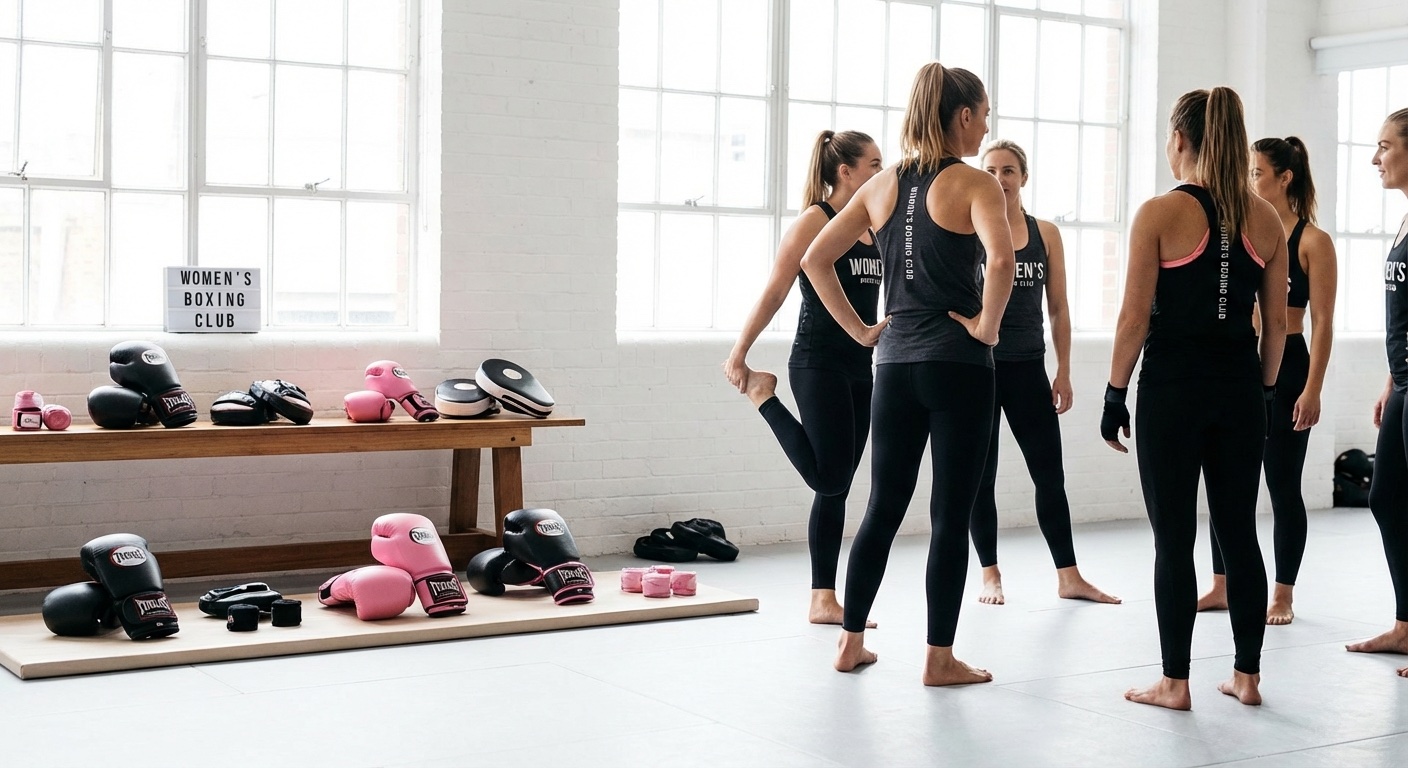
Walking into any new fitness class feels awkward. Walking into a boxing gym when you've never thrown a punch? That's next level intimidating.
But here's the thing - everyone feels that way. Every woman in that class once stood where you're standing, wondering if she'd look stupid. She didn't. And neither will you.
Here's exactly what happens in women's boxing classes so you can walk in knowing what's coming.
Before You Arrive
What to Wear
Keep it simple:
- Sports bra and comfortable top (you'll sweat)
- Leggings, shorts, or joggers
- Clean trainers with flat soles (running shoes work, but boxing boots or cross-trainers are ideal)
- Hair tied back (ponytail or bun that sits low enough to not interfere with headguards later)
Don't worry about looking "boxing-ready." Nobody expects you to arrive in full kit. Comfortable workout clothes are perfect.
What to Bring
- Water bottle (you'll need it)
- Small towel
- Hand wraps if you have them (most gyms lend or sell them for beginners)
- Gloves if you have them (otherwise the gym provides)
That's genuinely it. No special equipment needed for your first session.
Mental Preparation
The only thing you need to accept: you will feel uncoordinated, confused, and out of breath. That's normal. That's learning. Nobody expects a beginner to look like a boxer.
Give yourself permission to be rubbish. It's the first step to getting good.
When You Arrive
Get there 10-15 minutes early. This lets you:
- Fill out any forms
- Get shown around
- Ask questions while you're not rushed
- Watch the previous class finish (which helps you visualise what's coming)
- Have your hands wrapped (takes a few minutes when you're learning)
The coach should introduce themselves and ask about any injuries or concerns. If they don't ask, tell them anyway. Knowing your shoulder plays up or your knees are dodgy helps them modify exercises for you.
The Class Structure

Most women's boxing classes follow a similar format. Here's what a typical hour looks like:
Warm-Up (10-15 minutes)
You'll start with movements to raise your heart rate and mobilise joints. This might include:
- Skipping (don't panic if you can't skip - modifications available)
- Shadow boxing basics
- Dynamic stretches
- Simple movement drills
The goal is getting warm and loosening up. It's not meant to destroy you before the main session.
Technique (15-20 minutes)
The coach demonstrates punches, defensive movements, or footwork, then you practice. In beginner classes, this might be just the jab and cross. More advanced classes build combinations.
You'll practice on air first (shadow boxing), then move to bags or pads. The coach walks around correcting form and offering tips.
Don't rush this part. Technique matters more than power. A well-executed punch from a beginner beats a wild swing from someone who's trained carelessly for years.
Pad or Bag Work (15-20 minutes)
This is the fun bit. You get to actually hit things.
- Bag work. You'll work on heavy bags, practicing what you've learned. Bags don't hit back, so you can focus on technique, power, and combinations.
- Pad work. You pair up with another member or work with a coach holding focus mitts. They call out combinations and move the pads to help you develop accuracy and timing.
Pad work is more interactive and many people prefer it. You're working with another person, reacting to their movement, building a rhythm.
Conditioning (10-15 minutes)
Most classes finish with fitness work. This varies by gym but might include:
- Circuit training
- Core work
- HIIT intervals
- Boxing-specific conditioning (like punch-out rounds on bags)
This is where you earn that post-workout glow. Expect to work hard.
Cool Down (5 minutes)

Stretching to bring your heart rate down and maintain flexibility. Skipping this causes stiffness later.
Women-Only vs Mixed Classes
Some gyms offer women-only sessions. Others are mixed. Both work well, but they feel different.
Women-Only Benefits
- Some women feel more comfortable without men watching
- Pace is sometimes more beginner-friendly
- More likely to meet other women at similar levels
- Can feel less intimidating initially
Mixed Class Benefits
- More class time options
- Variety of training partners
- No separate is better or worse - just different environments
- Some women prefer the energy of mixed sessions
There's no wrong answer. Try both if available and see what suits you.
What About Sparring?
In most women's boxing classes, especially beginner and intermediate levels, there's no sparring. You won't be getting hit.
Sparring is something you progress to if you want to - weeks or months into training, with protective equipment, and always optional. Many women train boxing for years and never spar. They get the fitness, skills, and confidence without any interest in fighting another person.
If sparring eventually interests you, you'll know when you're ready. Until then, it's not on the agenda.
Common First-Class Worries (Addressed)
"I'm not fit enough"
Nobody is fit enough when they start. Boxing fitness comes from boxing. If you could already do it easily, you wouldn't need the class. Show up as you are.
"I'll look stupid"
Everyone looks stupid when learning something new. The difference is that boxing gyms understand this. Nobody is judging you - they're remembering when they were in your position.
"What if I can't keep up?"

Good coaches modify for ability. If something is too hard, they'll give you an alternative. If you need a breather, take one. Pushing through discomfort is fine; ignoring your body's limits isn't expected.
"What if it's too aggressive?"
Women's boxing classes aren't aggressive spaces. Yes, you're learning to punch, but the atmosphere is supportive and encouraging. The aggression is directed at bags and pads, not at each other.
"I don't know anything about boxing"
That's literally why you're there. Beginner classes assume no knowledge. The coach explains everything from how to stand to how to make a fist. No prior experience required.
After Your First Class
You will be tired. Probably more tired than you expected. Boxing uses muscles you didn't know you had. Prepare for:
- Sore shoulders (holding your guard is tiring)
- Aching core (rotation comes from the middle)
- General muscle fatigue
- Feeling quite hungry
This is normal. It gets easier as your body adapts.
You'll also probably feel something harder to describe - a kind of energy and satisfaction that comes from learning to punch things. Most women leave their first class feeling more powerful than they walked in.
How Often Should You Train?
Start with once or twice a week. Your body needs time to recover and adapt. Jumping into five sessions weekly as a beginner leads to burnout and injury.
After a month or two, you can increase if you want. Most recreational boxers train 2-3 times per week and see excellent results.
Finding the Right Class
Not all women's boxing classes are equal. Look for:
- Proper coaching (qualified instructors, not just fitness enthusiasts)
- Technique focus (not just circuits with boxing moves)
- Appropriate class sizes (so you actually get feedback)
- Welcoming environment (observe a class before signing up)
The best indicator is how you feel after a trial. Did you learn something? Did you feel supported? Would you go back?
Ready to Start?
Book a free trial at H&G and experience what women's boxing is actually like. Our classes welcome complete beginners and teach proper technique in a supportive environment. No experience needed - just show up ready to learn.
H&G Team
Writer at Honour & Glory Boxing Club, a community boxing gym in Kidbrooke, South East London.
MORE LIKE THIS


WANT TO JOIN US?
Book a free trial session and see what we're all about.
Book a Free Trial