Boxing Workout at Home (No Equipment Needed)
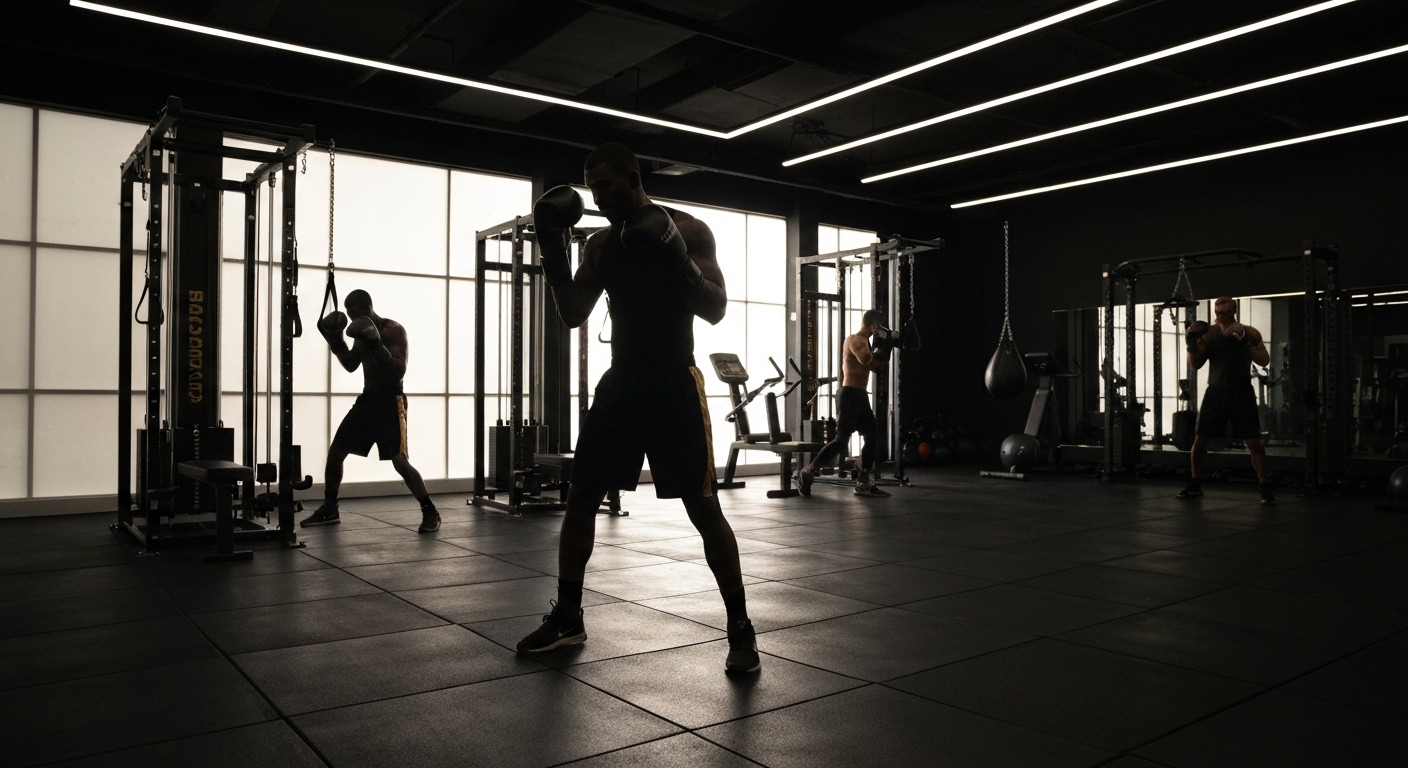
No gym? No problem. Boxing has been training champions in back rooms, garages, and prison yards for over a century. A proper boxing workout at home needs nothing except space to move and willingness to work.
This full routine builds the cardio, strength, and coordination that boxing demands. No equipment, no excuses. Just you and a bit of floor space.
Before You Start
Clear enough room to move in all directions. Ideally, you want about 6 feet by 6 feet minimum. Push the coffee table aside.
You'll need a timer. Your phone works fine. Set it for 3-minute rounds with 1-minute rests unless otherwise noted. Boxing timing teaches your body to work in fight-realistic intervals.
The Warm-Up (5 Minutes)
Don't skip this. Jumping straight into intense work gets people injured.
- Jumping jacks. 1 minute. Get the heart rate up.
- Arm circles. 30 seconds forward, 30 seconds backward. Loosens the shoulders.
- Hip circles. 30 seconds each direction. Your hips do a lot of work in boxing.
- High knees in place. 1 minute. Faster than jogging, building heat.
- Torso twists. 1 minute. Stand with feet shoulder-width apart, arms out, and rotate your upper body side to side.
You should be warm now, maybe slightly sweating. Good. That's the point.
Round 1: Shadow Boxing (Warm-Up Pace)
3 minutes of light shadow boxing. This isn't about power or speed yet - it's about finding your rhythm and warming up your boxing-specific movements.
Focus on:
- Staying in your stance
- Throwing light jabs and crosses
- Moving your feet constantly
- Keeping your hands up
Stay loose. Breathe naturally. This round is preparation for what's coming.
Rest: 1 minute
Round 2: Footwork Focus
3 minutes of intensive footwork.
First minute: Step forward and backward, maintaining stance. Quick, light steps.
Second minute: Lateral movement. Side to side, never crossing your feet.
Third minute: Mix it up. Forward, lateral, pivot, backward. Change directions randomly.

Keep your hands up the entire time. You should feel this in your calves and thighs.
Rest: 1 minute
Round 3: Punch Volume
3 minutes of high-volume punching. The goal is quantity - lots of punches thrown quickly.
The pattern:
- 10 jabs, fast
- 10 jab-cross combinations
- 10 jabs to the body (dip down when you throw)
- Repeat until the round ends
Don't worry about power. Keep the punches snappy and keep moving. By the end, your shoulders should be burning.
Rest: 1 minute
Round 4: Power Punches
3 minutes of heavy punches thrown with full effort. Opposite of Round 3 - this is about quality over quantity.
What to throw:
- Hard 1-2s with full hip rotation
- Powerful hooks where you feel your whole body turn
- Uppercuts driven from your legs
Throw maybe 5-8 punches, then reset. Breathe. Throw another burst. These should feel like real fight punches, the kind that would hurt someone.
Rest: 1 minute
Round 5: Defensive Movement
3 minutes focused entirely on defence and head movement.
The pattern:
- Slip left (move your head left, bending at the waist)
- Slip right
- Duck under (bob down and come up on the other side)
- Roll under (like ducking but moving forward)
Now add punches after each defensive move:
- Slip left, throw cross
- Slip right, throw jab
- Duck under, throw hook
- Roll under, throw uppercut
Keep the movement flowing. You're training the response of defending and immediately countering.
Rest: 1 minute
Round 6: Combination Work

3 minutes of putting it all together. Movement, punches, defence - everything combined.
Some combinations to throw:
- Jab-cross-slip-cross
- Jab-jab-cross-hook-roll-hook
- Slip-cross-hook-duck-hook-cross
Don't just stand there. Move between combinations. Circle, come forward, pivot away. Imagine an opponent and react to them.
Rest: 1 minute
Core and Conditioning Circuit
Now we're done with the boxing rounds. Time for conditioning.
Perform each exercise for 45 seconds with 15 seconds rest between:
Squat Jumps
Squat down, explode up, land soft, repeat. Builds the explosive power that generates punching force. Keep your core tight throughout.
Mountain Climbers
Plank position, drive knees to chest alternating rapidly. This torches your core and cardio simultaneously.
Bicycle Crunches
On your back, hands behind head, bring opposite elbow to opposite knee. Twisting strengthens the rotational core strength you need for hooks and body rotation.
Push-Ups
Standard push-ups. If regular push-ups are too easy, go slower or try diamond push-ups. If they're too hard, drop to your knees.
Plank Hold
Hold a forearm plank with a flat back. No sagging, no tenting your hips up. Just hold. Your abs should tremble by the end.
Burpees
Down, feet back, push-up (optional), feet forward, jump up. The exercise everyone hates because it works. If you can only do one conditioning exercise, make it burpees.
Cool Down (5 Minutes)

Don't just stop. Your body needs to wind down.
Standing forward fold: Let your upper body hang loose for 30 seconds. Stretches hamstrings and lower back.
Hip flexor stretch: Lunge position, back knee on ground, push hips forward. 30 seconds each leg.
Arm across chest stretch: 30 seconds each arm. Gets into your shoulders.
Shoulder stretch: Arm behind your head, elbow pointing up, gentle pull. 30 seconds each arm.
Deep breathing: 1 minute of slow, controlled breaths. Heart rate coming down.
Making It Harder
Once this workout feels manageable:
- Shorten rests to 45 seconds, then 30 seconds
- Add rounds - extend the boxing section to 8-10 rounds
- Increase intensity - more explosive movements, faster combinations
- Add light weights - small dumbbells (1-2kg) during shadow boxing rounds (careful with your shoulders)
Making It Easier
If you're just starting out:
- 2-minute rounds instead of 3 minutes
- Longer rests - take what you need
- Skip the burpees - substitute with stepping instead of jumping
- Reduce conditioning circuit to 30 seconds per exercise
There's no shame in starting where you are. The goal is progress, not destruction.
How Often?
This workout can be done 3-4 times per week. It's intense enough to need recovery days between sessions. On your off days, light stretching or walking keeps you mobile without adding training stress.
What Home Training Can't Replace
This workout builds fitness, coordination, and technique foundations. But it doesn't replace:
- Pad work with a coach who corrects your form
- Heavy bag work that builds impact conditioning
- Sparring that teaches you how to actually fight
- Coaching feedback that spots problems before they become habits
Home training supplements gym training - it doesn't replace it.
At Honour & Glory, we get you doing real boxing with proper coaching and equipment. The home workout keeps you sharp between sessions, but the gym is where real progress happens.
H&G Team
Writer at Honour & Glory Boxing Club, a community boxing gym in Kidbrooke, South East London.
MORE LIKE THIS


WANT TO JOIN US?
Book a free trial session and see what we're all about.
Book a Free Trial