Repton Boxing Club: History, Famous Boxers and Legacy
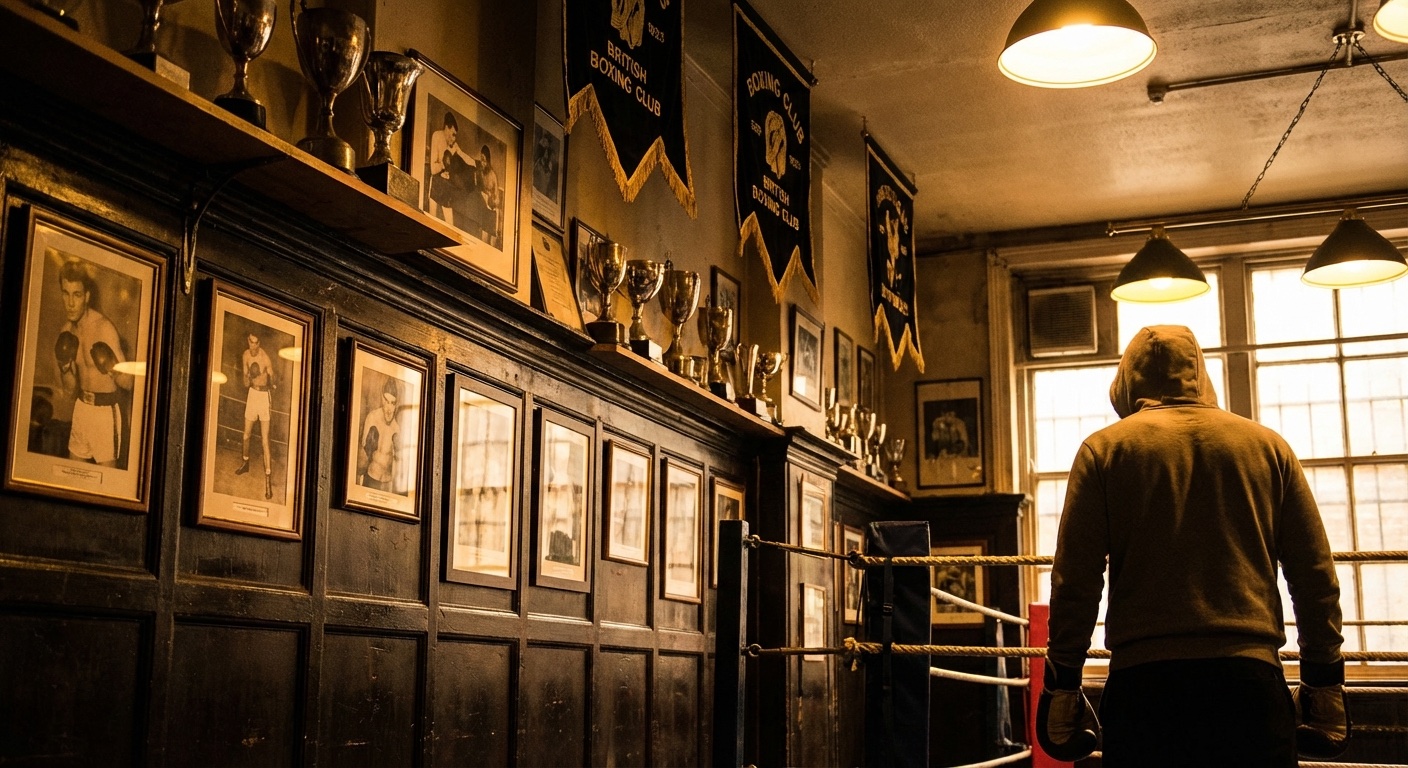
Walk into Repton Boxing Club in Bethnal Green and you're stepping into over a century of British boxing history. The gym sits in a converted Victorian bathhouse on Cheshire Street - a building that's been forging fighters since before World War One.
Repton isn't just another boxing club. It's been called Britain's oldest boxing gym, and the roll call of boxers who've trained there reads like a who's who of the sport. World champions, Olympic medallists, and yes - even the Kray twins.

The Origins of Repton Boxing Club
Repton was founded in 1884, making it one of the oldest amateur boxing clubs still operating today. The club takes its name from Repton School in Derbyshire, whose old boys established the gym as a way to provide sport and structure for working-class youth in the East End.
The founders believed boxing could instil discipline and offer an outlet for young men who might otherwise find trouble. That mission hasn't changed in 140 years.
The club moved to its current home - the converted Cheshire Street Baths - in the 1970s. The Victorian building gives the gym its distinctive character, with high ceilings, original tiles, and an atmosphere you simply can't manufacture in a modern fitness studio.
Famous Boxers from Repton
World Champions
John H. Stracey - WBC World Welterweight Champion
Stracey is perhaps Repton's most celebrated professional boxer. He won the WBC welterweight title in 1975 by knocking out the legendary Jose Napoles in Mexico City - a victory that shocked the boxing world. Napoles was considered unbeatable on home turf, having defended his title 13 times.
Stracey's combination of speed, skill and heart exemplified what Repton produces. He remains closely connected to the club today.
Maurice Hope - WBC World Light-Middleweight Champion
Maurice Hope made history in 1979 as the first black British immigrant to win a world boxing title. Born in Antigua, Hope moved to the East End as a child and found his way to Repton.
His technical ability and movement set him apart. Hope defeated Rocky Mattioli to claim the WBC light-middleweight crown and successfully defended it twice before losing to the great Wilfred Benitez.
Olympic Champions and Medallists
Audley Harrison - Olympic Gold Medallist (2000)
Audley Harrison became Britain's first ever Olympic super-heavyweight gold medallist at the Sydney Games in 2000. His success brought massive media attention and raised the profile of British amateur boxing.
Harrison trained at Repton during his amateur career, learning the fundamentals that would carry him to Olympic glory. His gold medal win remains one of British boxing's proudest moments.
The Kray Connection
You can't discuss Repton without mentioning Ronnie and Reggie Kray. The infamous East End gangsters were talented amateur boxers in their youth, training at Repton in the late 1940s and early 1950s.
Both brothers showed genuine promise in the ring before their criminal careers took over. Photos of the Krays still hang in the gym - a reminder of a complicated history that the club neither hides nor celebrates.
The Krays later became investors in the club, using their influence to generate publicity. It's a controversial legacy, but one that reflects the reality of East End life in that era.

What Makes Repton Special
The Environment
Repton has a particular energy. There's no chrome, no mirrors, no fancy equipment. Just heavy bags, a ring, and the sound of skipping ropes and leather on leather.
The gym's famous pigeon emblem comes from the coat of arms of Repton School. You'll see it everywhere - on the walls, on the club kit, tattooed on more than a few members.
The Coaching
Repton has produced generation after generation of quality coaches. Many came through as fighters themselves and returned to pass on knowledge. This continuity of coaching philosophy means certain fundamentals get drilled into every boxer who trains there.
The emphasis is on proper technique, discipline, and respect. Flashy doesn't fly at Repton. Sound fundamentals and hard work do.
The Community
Walk in as a stranger and within weeks you'll know everyone. Repton creates bonds between people from wildly different backgrounds - united by the shared experience of pushing themselves in the ring.
The club has always served working-class East London, though the area has changed dramatically. Bethnal Green today is very different from the place that produced the Krays, but Repton continues to provide the same service: structure, discipline, and opportunity through boxing.
Repton's Influence on British Boxing
The Repton model - community-focused, technically rigorous, pathway to competition - has influenced amateur boxing clubs across Britain.
When people talk about what a "proper" boxing gym should be, they're often describing something like Repton. The emphasis on amateur boxing, on developing young fighters, on building character alongside skill.
Many modern clubs, including our own at Honour & Glory, draw inspiration from this approach. We believe boxing should be accessible to everyone, that proper technique matters, and that the gym should serve its community.
How Repton Compares to Modern Clubs
What Repton Offers
- Deep history and authentic boxing culture
- Pathway to competitive amateur boxing
- Legendary coaching lineage
- Strong sense of identity and belonging
- Affordable membership
- Connection to boxing's greatest traditions
What Modern Clubs May Offer Differently
- More flexible training schedules
- Updated facilities
- Additional fitness options beyond boxing
- More beginner-focused programmes
- Different geographic convenience
Neither approach is better or worse - they serve different needs. Someone wanting to compete at a high amateur level might choose Repton. Someone wanting quality boxing coaching with modern facilities closer to home might choose differently.
Visiting Repton
Repton welcomes visitors, though you should approach it as a working gym, not a tourist attraction. If you want to train there, contact them properly and be prepared to commit.
The club runs sessions for all levels, from complete beginners to competitive fighters. Like most traditional amateur clubs, you'll need to demonstrate commitment before being fully welcomed into the community.
The Future of Traditional Boxing Gyms
Clubs like Repton face challenges. Property costs in East London are astronomical. Funding for amateur sport is inconsistent. The fitness industry has changed how people think about boxing.
But Repton has survived two world wars, multiple economic crises, and the complete transformation of its neighbourhood. The appetite for authentic boxing - real skill development, real competition, real community - hasn't disappeared.
New gyms open constantly, but few will still be standing in 2124 the way Repton will likely be. There's something to be said for institutions that endure.
What We Can Learn from Repton
At Honour & Glory, we're a much younger club than Repton. But we believe in the same principles: proper technique taught by knowledgeable coaches, respect for the sport's traditions, and creating genuine community.
We're not trying to be Repton - they're a legendary institution with a unique history. But we do aim to provide that same quality of authentic boxing coaching in South East London.
If you're in the Kidbrooke area and want to experience what proper boxing training feels like - without the commute to Bethnal Green - come see us. We offer the fundamentals that made clubs like Repton great, adapted for modern life.
---
H&G Team
Writer at Honour & Glory Boxing Club, a community boxing gym in Kidbrooke, South East London.
MORE LIKE THIS


WANT TO JOIN US?
Book a free trial session and see what we're all about.
Book a Free Trial