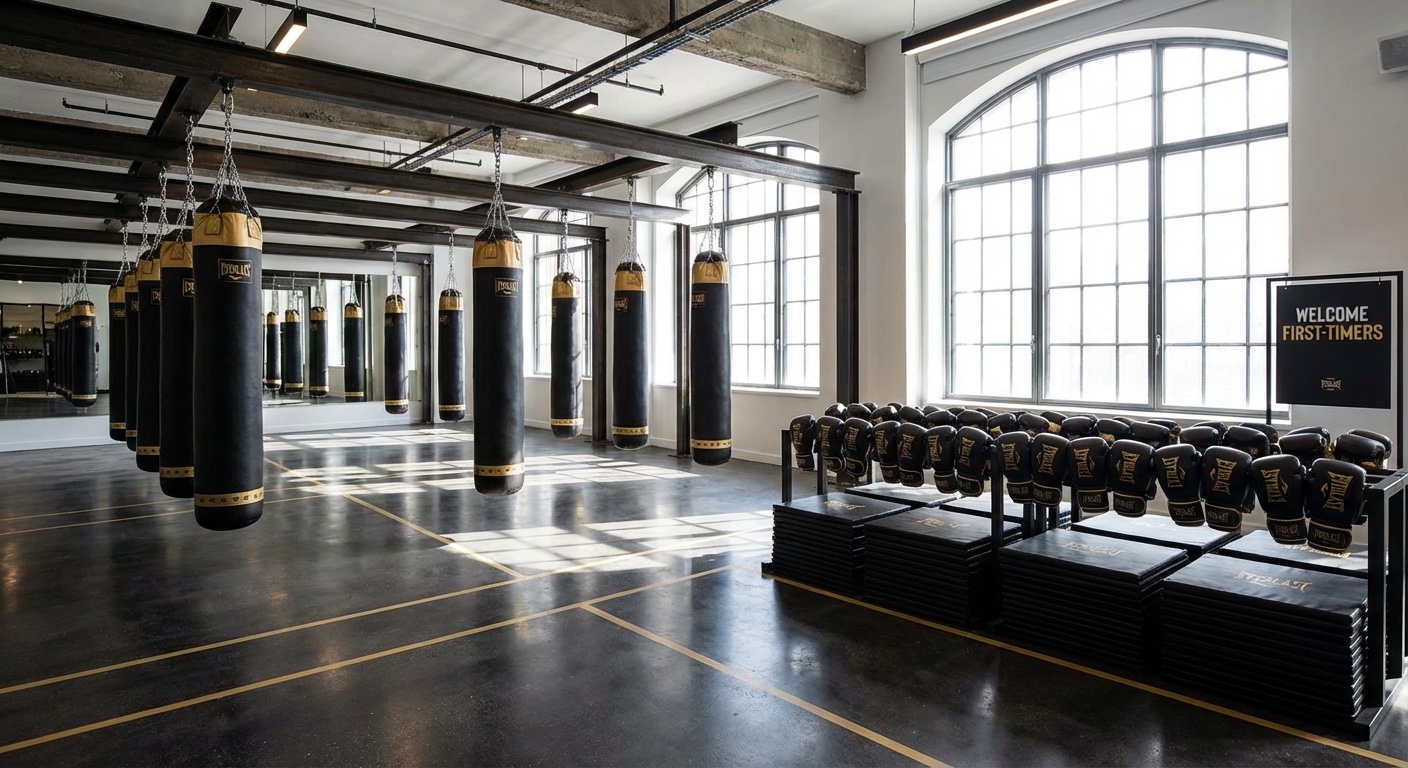
Walking into your first boxing class is nerve-wracking. Your brain conjures images of getting punched in the face by experienced fighters while everyone watches. You wonder if you'll embarrass yourself. Maybe you should train at home first and come back when you're "ready."
Stop right there.
None of that is how it actually works. Your first boxing class will be challenging, sure, but it's designed for beginners. Let me walk you through exactly what happens so you can show up prepared.
Before You Arrive
Most gyms will ask you to arrive 10-15 minutes early for your first session. This gives you time to:
- Fill out a quick health questionnaire
- Meet your coach
- Get shown around the facility
- Borrow equipment if needed
- Change and get settled
Eat a light meal about two hours before class. Nothing heavy - a banana and some toast works fine. You want energy without feeling sluggish.
Bring water. Lots of it. Boxing makes you sweat more than you'd expect.
The Warm-Up (10-15 Minutes)
Every boxing class starts with a warm-up. This typically includes:
- Jogging or skipping rope
- Dynamic stretches
- Basic bodyweight exercises like squats and press-ups
- Movement drills
Don't underestimate the warm-up. Boxing gyms take it seriously because training with cold muscles leads to injuries. By the end of it, you'll already be breathing harder than expected.
Some beginners panic at this point, thinking they're not fit enough. You are. The warm-up is meant to challenge you. It gets easier every session.
Learning the Basics (15-20 Minutes)
As a first-timer, you'll spend time on fundamentals:

- Your stance. How to position your feet, where to hold your hands, how to stand balanced. Left foot forward if you're right-handed (orthodox), right foot forward if you're left-handed (southpaw).
- The guard. Hands up protecting your chin and cheeks. Elbows tucked in. Chin slightly down. This position will feel awkward and tiring at first.
- Basic footwork. Moving forward, backward, and side to side while maintaining your stance. Sounds simple. It isn't.
The coach will demonstrate each element and then watch you practice. They'll correct your positioning repeatedly. This is normal. Getting the stance right takes weeks of adjustment.
Pad Work or Bag Work (20-30 Minutes)
This is the fun part. You'll either work with a partner holding pads or hit the heavy bag.
For beginners, coaches usually start with just two punches:
- The jab. A straight punch with your lead hand. Quick, snappy, then straight back to guard position.
- The cross. A straight punch with your rear hand, rotating your hips for power. This one feels more natural for most people.
Your coach will call out combinations. "One-two" means jab followed by cross. You'll hear this a lot.
The first time you hit pads properly and feel that satisfying pop, you'll understand why people love boxing. There's nothing quite like it.
Expect to Make Mistakes
On your first session, you'll:
- Drop your guard constantly
- Forget which hand is which
- Step with the wrong foot
- Lose your balance
- Run out of breath quicker than everyone else
- Feel completely uncoordinated
All of this is fine. Expected, even.
Coaches have seen hundreds of beginners make these same mistakes. They're not judging you. They're focused on helping you improve.
The only real mistake is not trying.
The Conditioning Portion (10-15 Minutes)
Most classes include a conditioning section near the end. This might involve:

- Core exercises like sit-ups and planks
- More press-ups
- Burpees (every boxer's favourite)
- Squats and lunges
This part hurts. Your muscles will burn and your lungs will scream for mercy. Do what you can. If you need to rest, rest. Nobody expects you to keep up with people who've been training for months.
Over time, this conditioning becomes almost enjoyable. Almost.
Cool Down and Stretching (5-10 Minutes)
Class finishes with static stretching. Hold each position for 20-30 seconds. This helps with recovery and prevents muscle tightness.
Take this seriously. Skipping the cool-down might save five minutes but you'll pay for it the next day when you can barely lift your arms.
What About Sparring?
Here's what most beginners worry about: getting punched.
Good news - you won't spar on your first session. Or your fifth. Or probably your tenth.
Sparring is for people who have the basics down and have expressed interest in it. Even then, it starts light and controlled. Nobody throws you in with experienced fighters.
At most gyms, sparring is completely optional. Plenty of people train for years and never spar. Boxing is brilliant exercise even without getting hit.
How You'll Feel Afterwards
Physically exhausted but mentally energised. It's a strange combination.
Your shoulders will ache. Your calves will be sore. You might feel muscles you didn't know existed.
But you'll also feel accomplished. You did something challenging. You faced your nerves and showed up anyway. That feeling is addictive.

By the next morning, the soreness will be worse. This is called DOMS (delayed onset muscle soreness) and it's your body adapting. Stay hydrated, stretch gently, and embrace it as evidence you worked hard.
Will Everyone Be Better Than Me?
Probably, yes. Most people in the class will have been training longer than you.
Does it matter? Not at all.
Boxing gyms are generally supportive places. People remember being the nervous beginner. They respect anyone who walks through the door and gives their best effort.
Focus on your own training. The only person you're competing against is yesterday's version of yourself.
How to Get the Most From Your First Session
A few tips:
- Listen more than you talk. Coaches give constant feedback. Absorb it.
- Don't be afraid to ask questions. There are no stupid questions when you're learning.
- Give maximum effort. Push yourself even when it's uncomfortable.
- Stay humble. Accept corrections without making excuses.
- Enjoy it. You're learning to box. That's pretty cool.
What Happens Next?
After your first class, you'll know if boxing is for you. Most people are hooked immediately.
The key is coming back for session two, then three, then making it a habit. That first awkward class turns into genuine skill after a few months of consistent training.
The version of you who nervously walked into the first session won't recognise the confident boxer you'll become.
Try a Class at Honour & Glory
Still nervous? That's normal. The best cure for nerves is action.
We offer free trial sessions specifically for beginners. Our coaches are patient, our members are welcoming, and we focus on helping newcomers feel comfortable.
H&G Team
Writer at Honour & Glory Boxing Club, a community boxing gym in Kidbrooke, South East London.
MORE LIKE THIS


WANT TO JOIN US?
Book a free trial session and see what we're all about.
Book a Free Trial